




Indoor lights for Cannabis grow: LED vs Bulbs


- 1. Cannabis and lighting
- 1. a. Fluorescent bulbs (cfl)
- 1. b. High-intensity discharge bulbs (hid)
- 1. c. Led panels
- 1. d. Some extra tips for lighting considerations
- 2. The wrap-up
When it comes to indoor feminized seeds cultivation, lighting is right at the top of the list of the most important elements. Providing the correct spectrum of light at the right intensity can truly be the difference in reaching the types of yield and potency we all dream of. But with so many options out there, and the technology seemingly progressing at, excuse the terrible pun, lightspeed - how is a new grower supposed to know what the best option is for their particular indoor grow area?
We are in 2026, and there is a range of different options out there, each with its own set of pros and cons. From high-end, tuneable LED panels to budget CFL options - and everything in between - deciding on the best option for your indoor grow space can be just slightly daunting for novice growers, to say the very least. There are a bunch of considerations to mull over, so before dropping your hard-earned cash on the wrong option, join us as we go over everything there is to think about when looking for the best indoor light fixture for your grow room or tent (or closet, or anywhere else really)!
1. Cannabis and Lighting
Before we dive into all the technical mumbo-jumbo, let's have a quick chat about how cannabis plants use the light you are going to provide to them, and how the timing of the light schedule affects plant development.
There are two main types of strains that you will find on the market. No, not Sativa and Indica. We are talking about the photoperiodic and autoflowering split. Most growers out there know the difference between the two, but let's break it down quickly for the uninitiated among us. All strain options, no matter whether they are photos or autos, go through a couple of distinct growth stages. These are:
- The Germination Stage - when the seed sprouts and the tap root breaks free of its woody prison.
- The Seedling Stage - when the plant begins to grow shoots and leaves. A cannabis plant is considered to be a seedling until its second set of true leaves emerges.
- The Vegetative Stage - when the plant begins to really start to put on size. The vegetative growth stage is the first main stage of plant development, where the plant structure is formed, and the cannabis plant is ready for the transition into flowering.
- The Flowering Stage - when the cannabis plant enters reproductive maturity, producing those dank, stanky buds that we all know and love.
Photoperiod Strains
As the name may suggest, the growth stage of photoperiodic strains is decided by the timing of the lighting cycle. When growing indoors, cultivators have total control of the growth stage by controlling the lighting schedule.
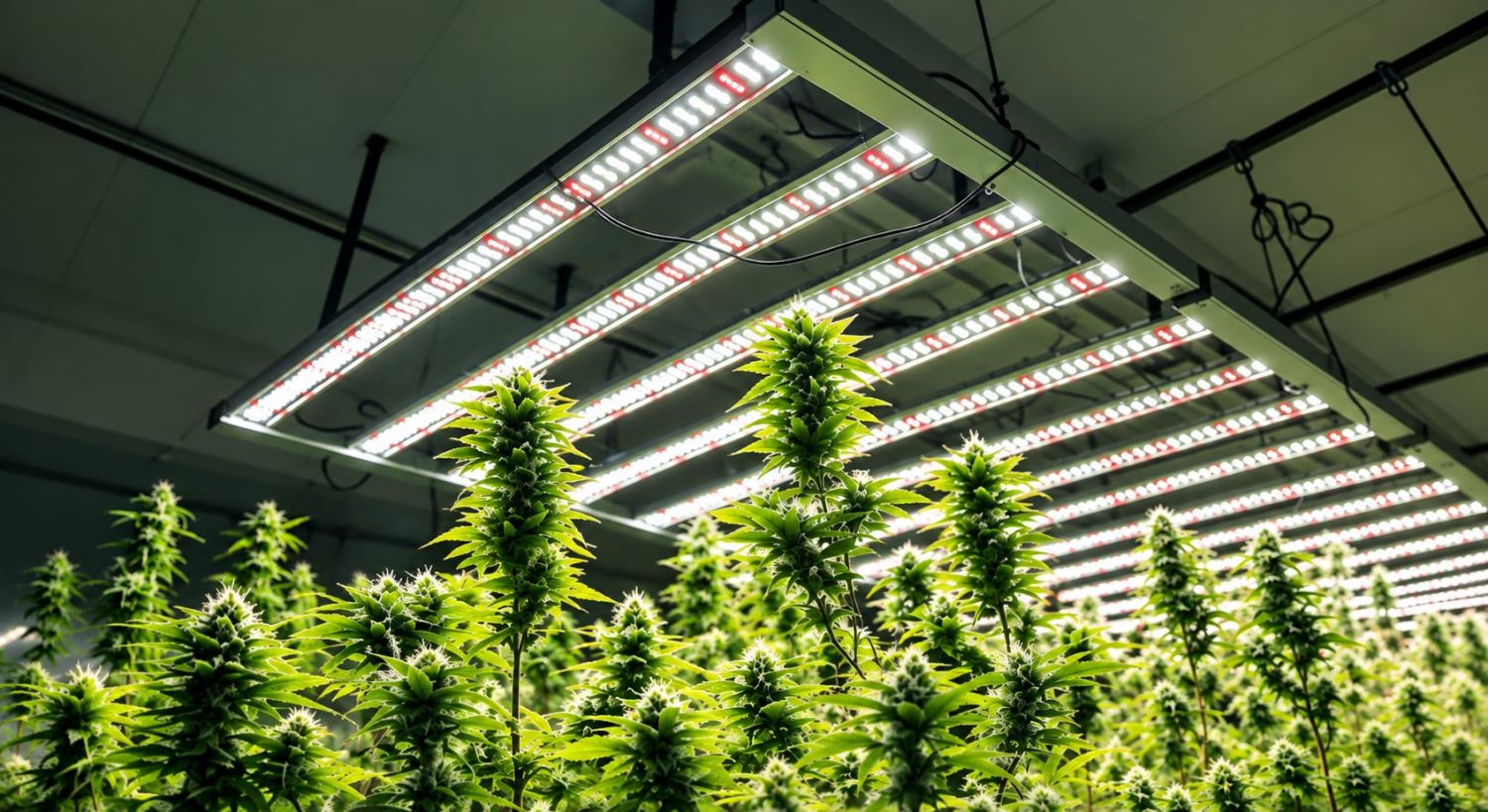
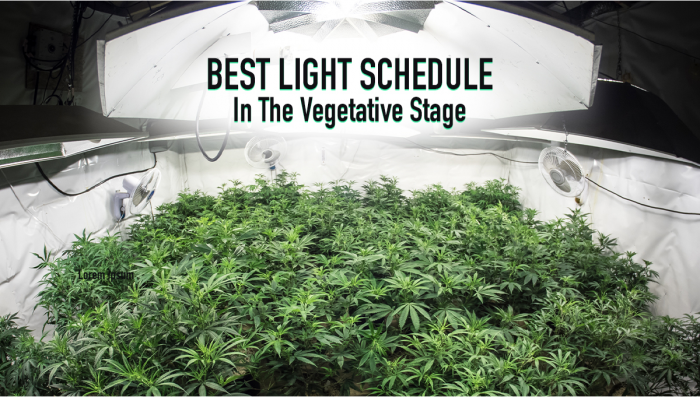
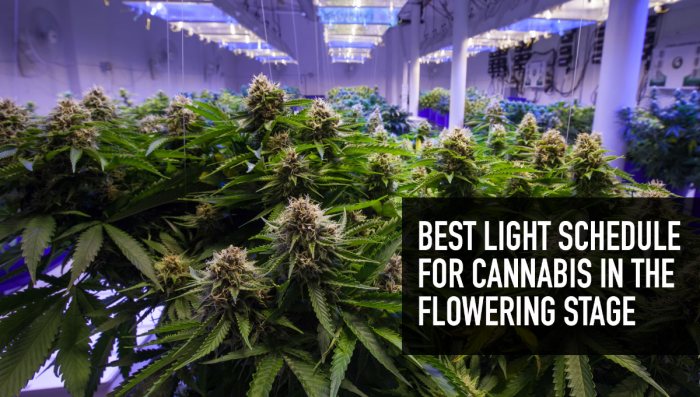
For the seedling and vegetative growth stage, photoperiod plants need to receive a minimum of 18 hours of light and 6 hours of darkness every day. This is usually referred to as 18/6 in growing circles. Once you are happy with the size and structure robustness of the plant, you simply switch to a 12/12 pattern - or 12 hours of light and 12 hours of darkness. This signals to the cannabis plant that it is time to begin flowering and start producing those beautiful cannabis buds.
Autoflower Strains
Autoflowering cannabis strains take the guesswork out of cannabis cultivation. The flowering cycle is determined by the age of the plant, not the amount of light it receives - meaning that once you reach around the fourth week of growth, the plant will automatically switch to flower production, no matter the lighting schedule.
This inherent feature of autoflowering strains comes with a range of benefits, especially for indoor growers who are just starting their cultivation journey. Not only can you keep the light timing at 18/6 during the entire grow (or 20/4, or even 24/0), which makes life just that little bit less complicated, you can easily set up a single-room or tent perpetual harvest routine. Autos are hardier than their photoperiod kin, they also need fewer nutrients, they are usually ready to harvest in around 8 to 10 weeks or so, and can match photo strains in terms of potency and yield.

Cannabis Light Spectrum and Intensity
Once you have decided which cannabis strain type is best for your setup, and what light schedule to follow, it's time to think about the cannabis light spectrum. To put it simply, cannabis plants need the full range of light to hit their genetic potential. Think about it for a second. The sun provides the full range of light frequencies, and the plants have evolved under those conditions for millions of years - so why would weed plants respond perfectly to anything less? That's not to say that you can't grow everyone's favorite plant under lights that do not provide the full spectrum, just that you will not get the same performance or yield as you would with lights that have been formulated to match the natural sunlight.

Furthermore, the intensity of the light you provide to your crop has a huge impact on the overall development and needs to match the stage of growth to see the best results.
The intensity is measured in PPFD, which can be measured with a PAR meter. You want to adjust PPFD levels as the crop develops, reaching approximately 100-200 PPFD for seedlings, 300 - 600 for the vegetative stage, and 700-1000 PPFD for the flowering stage.
Fluorescent Bulbs (CFL)
Compact Fluorescent Lights (CFLs) are the usual go-to light source for small or low-budget grows. They are affordable and easy to find and can be sourced from your big box home improvement stores or even certain supermarket chains. With standard socket sizing that offers a super easy setup, affordable prices, low energy usage, low heat emission, and a wide variety of options available, CFL bulbs are a great option for growers on a budget. They come in a range of wattage and spectrum options and make a great lighting choice for plants in the germinating and seedling stages.
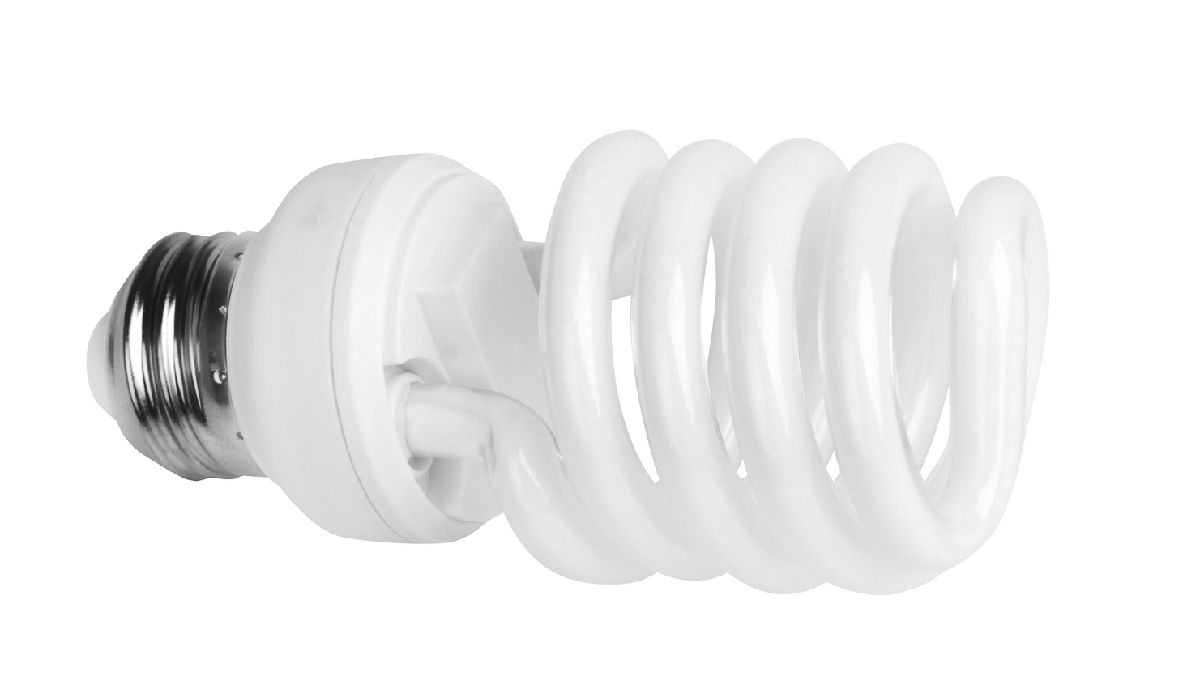
If you are setting up a micro closet grow or something of the like, then CFLs may do the trick for the entire crop run, but they do come with some marked disadvantages. Their low power and intensity mean that there is just no way that they will ever allow a cultivar to reach its genetic peak, and they are anything but optimal for the flowering growth stage. They also have a much shorter working lifespan than the other lighting options, but then again they are much cheaper. For the most part, unless you really have no other option available to you, we do not suggest growing under fluoros past the seedling stage. When considering the possible yield potential of CFLs, you can expect to produce under half a gram per watt or around 10 to 15 grams per light.
High-Intensity Discharge Bulbs (HID)
HID lighting was, for decades, the gold standard in cannabis lighting. Advancements in LED technology have overtaken them in terms of efficiency, but they still remain a much-loved choice for many growers thanks to their huge output and easy setup. High-Intensity Discharge Bulbs, to give them their full name, are available in three different spectrums: Metal Halide (MH), High-Pressure Sodium (HPS), and Ceramic Metal Halide (CMH). MH bulbs produce a bluer spectrum which is used during the vegetative growth period, while HPS bulbs produce an orange-ish pink light that is more suitable for flowering. CMH bulbs are a hybrid of the two and feature the best of both worlds in one neat package.
HIDs remain hugely popular despite their higher cost (when compared to CFLs) and power usage due to their much higher light output and intensity, which makes them great for indoor cannabis cultivation, but they do come with a few drawbacks.
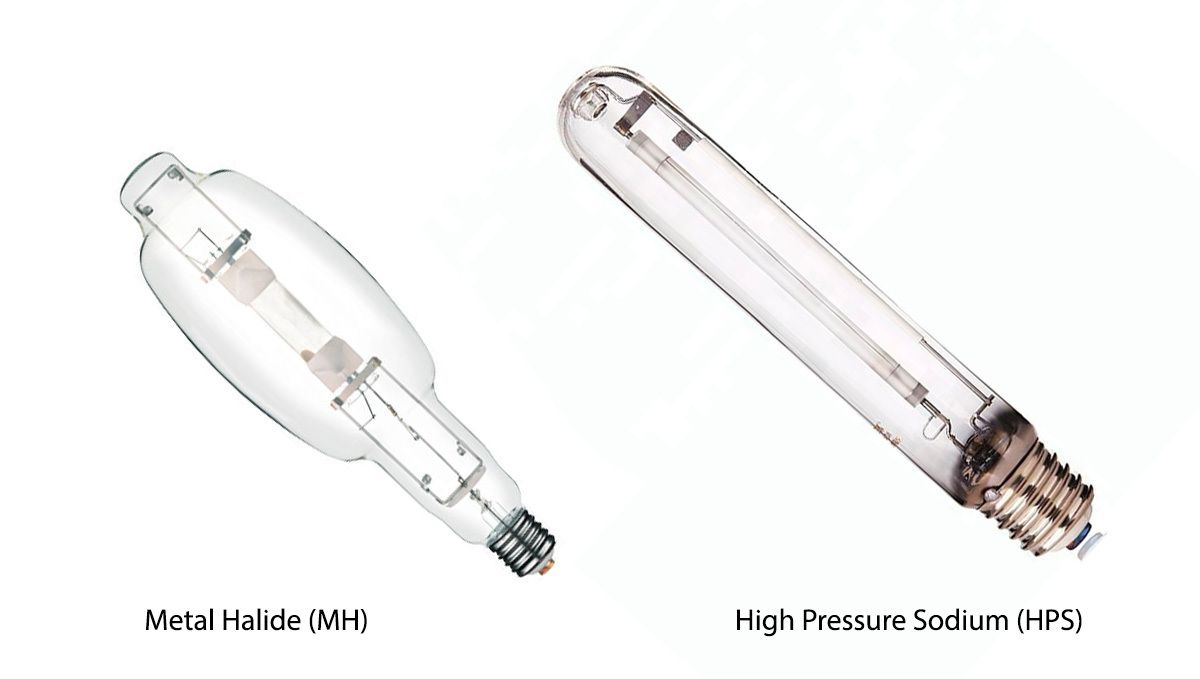
Firstly, they produce a bunch of heat. There are ways to mitigate this issue, such as using a cool tube fixture, but this is an inherent problem that can only be reduced, not eliminated. Furthermore, HIDs need frequent bulb replacement (every 6-9 months) and are also a bit of a hassle to set up. You need to purchase a separate lighting ballast to get the most out of them, and you will also need a hood reflector, which can get pricey. Overall, though, they are cheaper to buy outright than LED panels and produce amazing yield and potency results. Expected yields are around 1 gram per watt of lighting provided. So, if you create a 4x4 foot grow space with a 600W HID lighting rig, you can expect to pull around 600 grams of bud each harvest (strain selection and cultivation experience also play into this, as well as environmental factors)
Led Panels
While Light Emitting Diode grow lighting options have been around for more than ten years, they are still somewhat considered to be the new kids on the block. But, in the last few years, we have seen the tech come a long way, to the point where they have now overtaken HID options as the very best a grow room can get. Sure, you will still pay a little more for a good LED panel than a HID rig of similar output (although the prices are still dropping and are not far off the competition), but they come with so many advantages. In this day and age, there really is no reason not to use an LED panel, unless you just can't afford one.
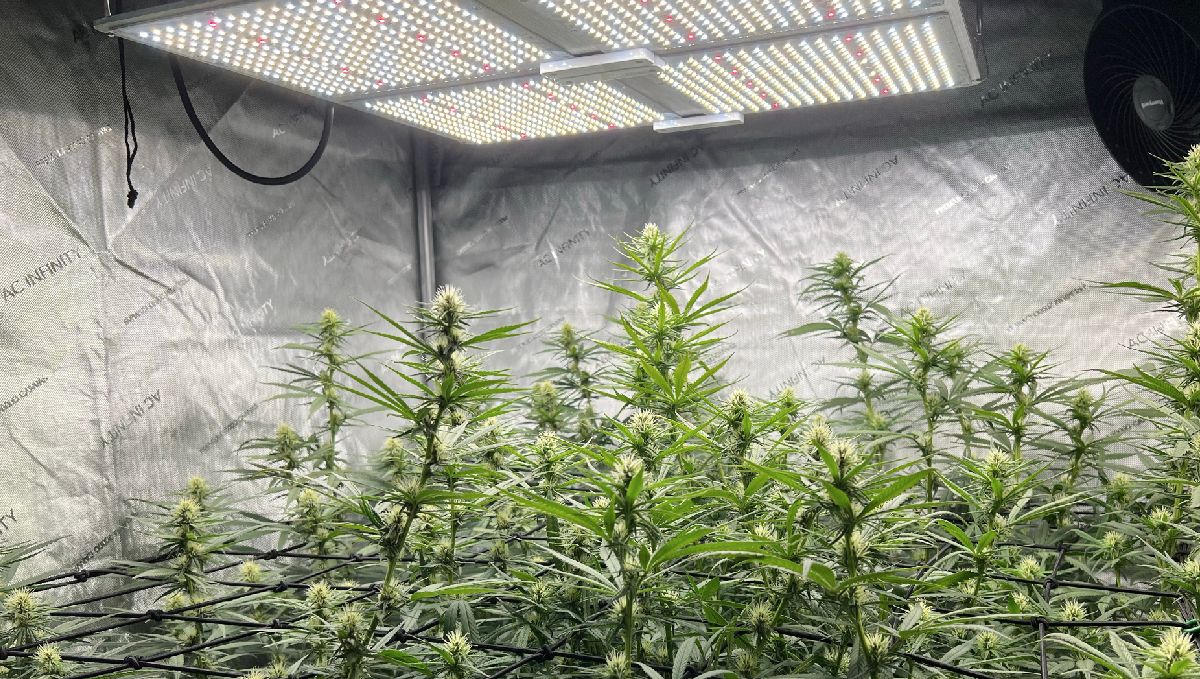
These pros include huge savings on energy bills thanks to the fact that they consume less than half the energy of HID bulbs, which in turn means they also run much cooler. This makes them much easier to implement into any-sized grow space, but especially smaller ones. They don't require a separate power ballast, come in a range of size options, and the newer technology is light spectrum tunable, meaning they offer the full light spectrum. Honestly, just save your shekels until you can afford an LED panel that suits your growing area. You'll thank us and yourself in the long run. In terms of yield potential, new LED panels can match (or even surpass) HID options. Expect at least 1 gram per watt once you have all of the other considerations dialed in.
Some Extra Tips for Lighting Considerations
Wattage is not the Be-All and End-All
Power equivalence is something that should be well understood before you make any decision about the lighting type you run with for your grow room. Wattage is a figure that is used to measure energy input, not the actual lighting power output. Let's look at an example to better explain. Say we put a 400W CFL side by side with a 400W HID rig and a 400W LED panel. The differing technologies have different efficiency ratings, meaning the output from the three identical wattage lights will be very different. The CFL will obviously lag behind the other two by a fair margin, but how about comparing the wattage of HID and LED options?
You might think that if both are labeled 400W, then they'd be the same output. This is not true, though - LED panels are more efficient, so you'd actually be getting higher output from the LED compared to the HID. So, even if the watts are identical, the lighting intensity and power output can be higher in one type than another.
Lighting Positioning is Key
The distance from the canopy that you are able to set the lighting rig to is also dependent on the type of lighting you decide on. HID bulbs will need to be set a fair way from the canopy (the top of your plants) due to the heat output, and you will also need to be mindful of the fact that the light produced is not spread evenly. This means it can create hot and cold spots in the room.
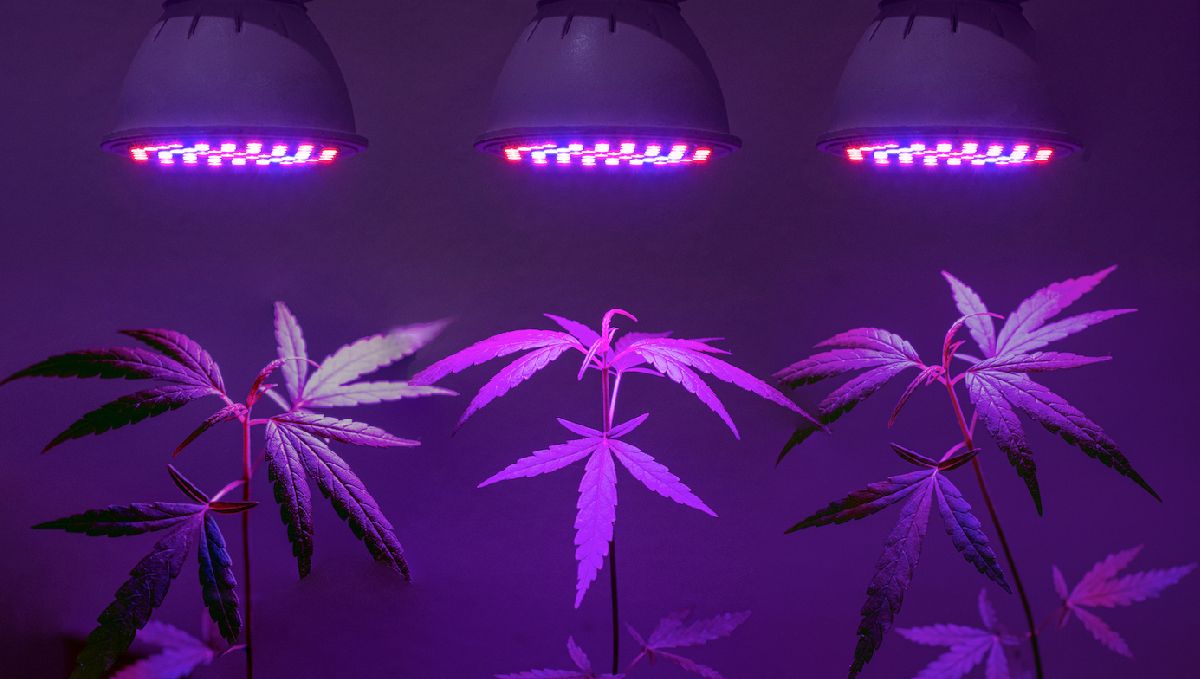
LED panels are far better suited to close-proximity grow lighting, and can be set as little as 8 to 10 inches (20-25 cm) away from the canopy depending on the panel. This type of proximity reduces the spread of light but also keeps lighting uniform along the canopy. Plus, no matter how close you place them to the plants, they still won't heat your grow room or cause any heating or light burn issues.
Cover Your Grow Area in a Reflective Coating
This may seem like the most obvious tip in the whole wide world, but if you want to get the most out of any lighting option, you are going to want to cover every square inch of your grow area in a reflective coating. Essentially, this will act as a makeshift mirror for the light to bounce off of, meaning it can reach the plants from any angle. This is especially important if you are running an HID light, as their odd spread of energy can mean much of the light is wasted. A reflective coating will get the most out of your lighting rig by bouncing off all of the light in multiple directions, making sure your plants get the most out of it. Simple.
3. The Wrap-Up
So, there we go. All there is to know about the three main grow light options for indoor cannabis cultivation, and all the associated pros and cons for each. Now it’s just a case of finding the best solution for your particular needs and getting to work on that grow room. LED panels are the number one pick for most growers, but if you are on a budget, then CFLs and T5s can still get the job done. Unfortunately, the days of HID dominance are behind us, and while goodbyes can be a little sad, LED panels will help you achieve your goals with ease. Happy growing, and don't hesitate to leave a comment below if you have any other questions!FAQ
That really depends on your particular needs, but in the vast majority of situations, we recommend going for a quality full-spectrum LED grow light. Modern LEDs are efficient, produce relatively little radiant heat compared with traditional HID systems, and are available in just about every size and power range imaginable. The best option will ultimately depend on the size of your grow space, your budget, and how much light your plants actually need.
That depends on whether you are growing photoperiod or autoflowering strains and what stage of growth your crop is in. For autos, it's pretty simple. An 18/6 or 20/4 schedule can be used throughout the entire lifecycle. For photoperiod plants, 18/6 is a common schedule during vegetative growth. Once you're happy with the size of the plants and are ready to initiate flowering, switch to a consistent 12/12 schedule.
In the past, CFLs and fluorescent tubes were popular choices for micro-grows, but compact LEDs have largely taken their place. The trick with a micro-grow is not simply buying the most powerful light that will fit. You want a fixture that provides even coverage across the canopy and can be dimmed or positioned so that you aren't blasting the plants with more light than they can use.
There isn't one correct hanging height for every LED grow light. A powerful fixture may need to sit much farther from the canopy than a smaller, lower-powered unit. Start with the manufacturer's recommended hanging height and adjust from there. If possible, use a PAR meter to measure PPFD at canopy level rather than relying entirely on distance. Also watch the plants for signs of excessive or insufficient light.
PPFD stands for Photosynthetic Photon Flux Density. Put simply, it measures how much photosynthetically active light reaches a particular area every second. That's much more useful to a grower than simply looking at the wattage of a fixture. Two lights drawing the same amount of electricity can deliver very different amounts of usable light to the canopy.
DLI stands for Daily Light Integral. It describes the total amount of photosynthetically active light a plant receives over an entire day. This is important because light intensity and photoperiod work together. For example, running a light for 20 hours instead of 18 hours increases the plant's daily light exposure if the intensity remains unchanged. That's one reason why simply asking how many hours the lights should run doesn't tell the whole story.
Plants exposed to excessive light may develop pale or bleached growth near the top of the canopy, upward-curling leaves, stressed leaf edges, or other signs of light and heat stress. Don't automatically assume that every pale leaf is caused by excessive lighting, though. Nutrient problems, irrigation issues, temperature, humidity, and root-zone problems can produce similar symptoms. Measuring PPFD and checking your environmental conditions will give you a much better idea of what's actually happening.
Definitely not. Bigger isn't automatically better when it comes to grow lights. What matters is delivering an appropriate amount of light evenly across your canopy. An oversized fixture in a small tent may simply waste electricity, generate unnecessary heat, and force you to dim the light significantly. Pay attention to fixture efficiency, coverage, PPFD distribution, and the dimensions of your grow space rather than judging a light solely by its wattage.
Not necessarily. One of the advantages of a dimmable LED is that you can adjust its output as the plants develop. Young plants generally don't require the same light intensity as mature plants. Starting at a lower intensity and gradually increasing the output can therefore be more sensible than running the fixture flat-out from day one.
Yes, although quality LED fixtures usually degrade gradually rather than suddenly failing. Over thousands of operating hours, LEDs typically produce progressively less light. The rate of degradation depends on the quality of the diodes, operating temperature, driver, fixture design, and how hard the LEDs are being driven. Good thermal management can therefore contribute significantly to the useful life of an LED fixture.

Comments