




The Best Lighting for Autoflower Cannabis



- 1. Fluorescent lights
- 1. a. Fluorescent lights: cfl
- 1. b. Fluorescent lights: t5
- 2. High-intensity discharge (hid)
- 2. a. Metal halide (mh)
- 2. b. High pressure sodium (hps)
- 3. Led light fixtures
- 4. How about the best lighting schedule for autos?
- 5. What's best for you?
There's something genuinely satisfying about planting a seed in the ground and watching a cannabis plant seemingly appear out of nowhere, fed by the sun. Unfortunately, prohibition prevents many growers from doing just that. They have to take their growing indoors, away from the light source these plants were designed to use. Indoor growers have to pay for every lumen of light, and replicating the sun doesn't come cheap.
Thankfully, lighting solutions for cannabis growing have come a long way in the past ten years. Before, even the smallest growing operation would use as much power as an air conditioner or overpowered gaming PC, whereas today it's possible to grow weed with LEDs that use less energy than the lights in your kitchen. We covered each different kind of bulbs available in our article, How to Grow Autolfower Cannabis Indoors.
Today we're going to identify your needs and pick the best solution for growing autoflowers in 2026. Here's a quick rundown of the options.
1. Fluorescent lights
Fluorescent lights are not necessarily recommended for flowering cannabis, but rather for clones and seedlings. However, in some cases, they can be the only option.
Fluorescent Lights: CFL
CFLs are those twisty bulbs you probably already have in your home. They can be found in any hardware store. Their ubiquity makes them an ideal solution for a discreet grower who doesn't want cultivation supplies on his or her credit card statement.
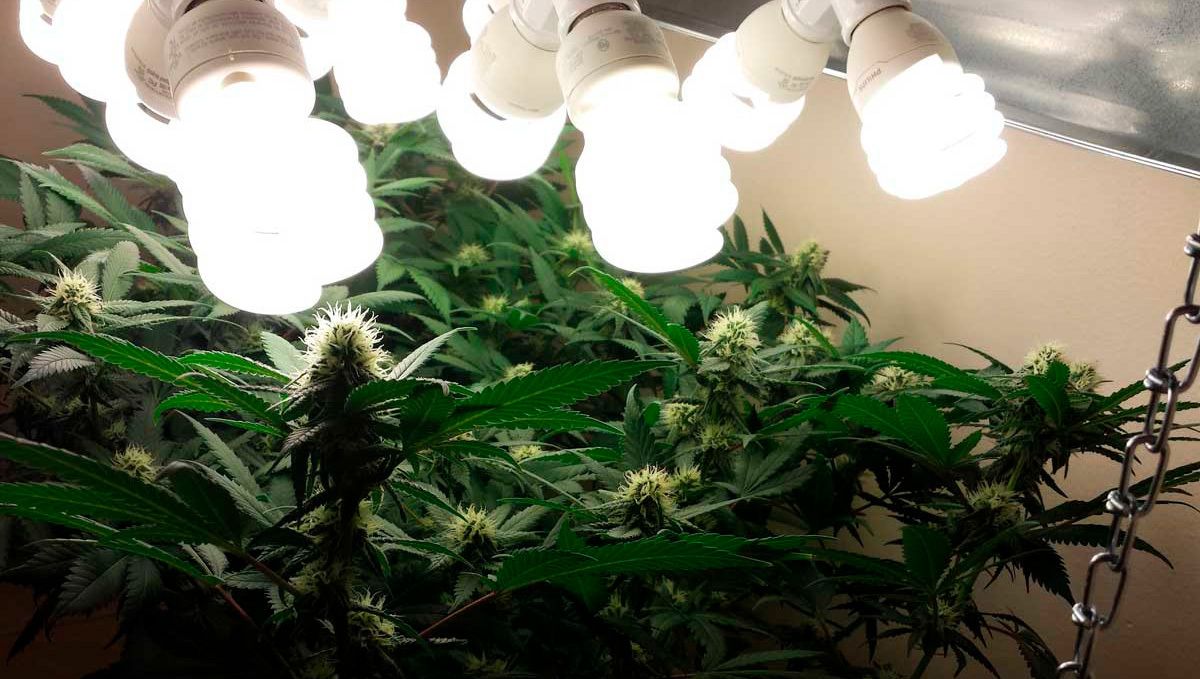
Their only downside is that while each bulb has relatively low power consumption, you'll need several bulbs to provide enough light to grow just one plant from seed to harvest.
Fluorescent Lights: T5
T5s are what you probably picture in your head when you hear the word fluorescent. These long tubes of electrically charged gas have been around since the 1930s. While they offer the same technology as CFLs, they're powerful enough to grow a plant from seedling to harvest. That said, their spectrum is the same, so it might not lead to the best possible quality and yields.

2. High-Intensity Discharge (HID)
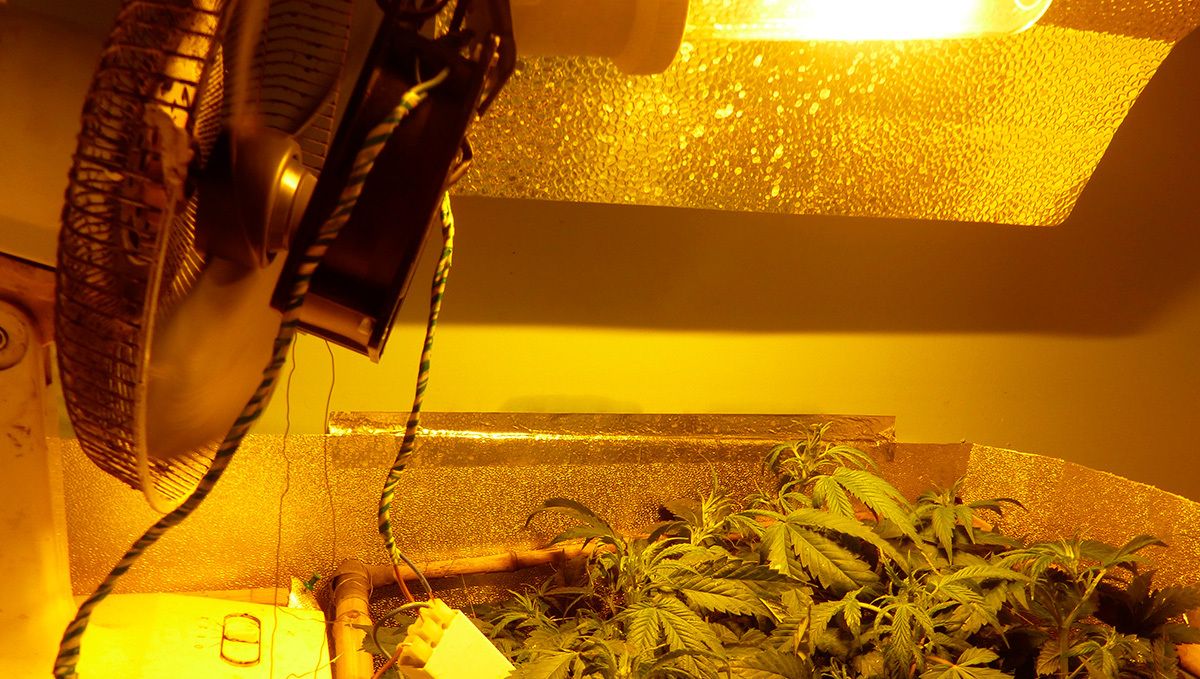
HID bulbs blast out massive amounts of light, and you'll notice it in your plant's growth if you decide to use them. They come in HPS and MH versions, allowing you to provide the full spectrum for cannabis cultivation, but they also generate large amounts of heat and use a great deal more electricity than other options.
Metal Halide (MH)
Rarely used for the length of a full grow, metal halide lights provide the ideal blue spectrum for vegging cannabis plants, but many growers switch to HPS come flowering.
High Pressure Sodium (HPS)
After vegging under metal halide, growers will often switch to high-pressure sodium lights for flowering. In terms of electricity used per unit of energy for the cannabis plant, the MH/HPS combo is the best option. However, neither of these lights comes cheap, and while they may be efficient in relative terms, they still use a great deal of power in the process, and you'll see it on your electric bill.
3. LED Light Fixtures
LEDs are the perfect low-power solution for growers with smaller tents and those growing with discretion in mind. Their high efficiency will save you money in the long run while providing better light penetration and a full spectrum without the need to change bulbs or anything like that.
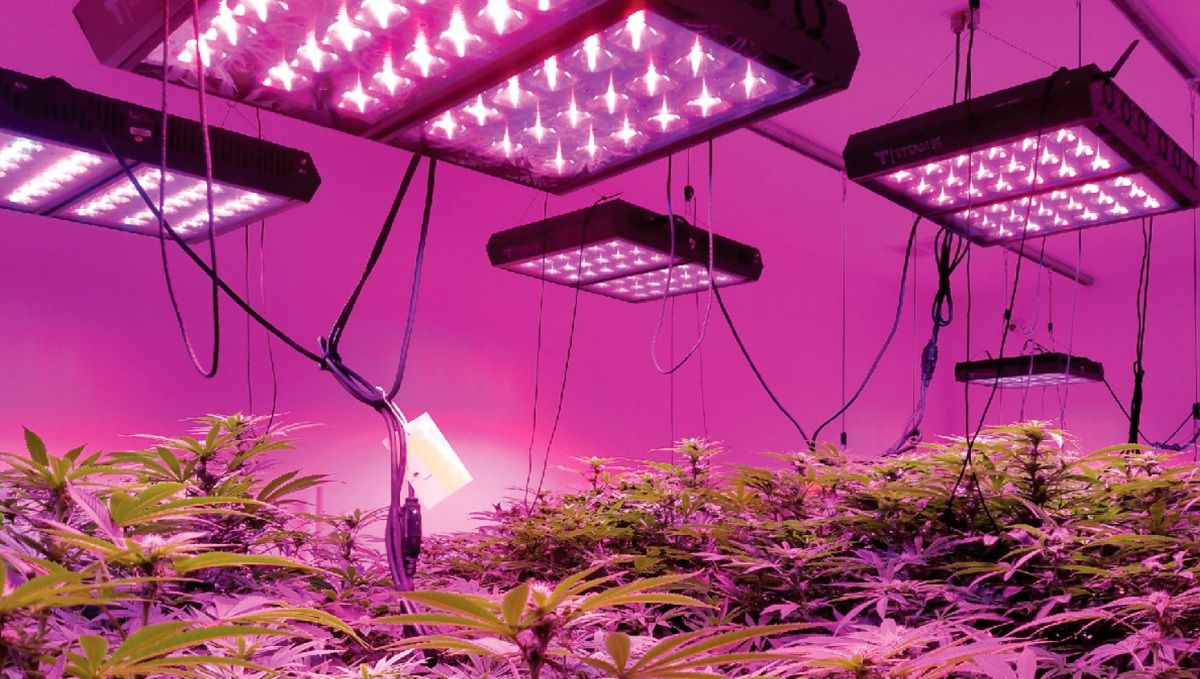
On the other hand, Blurple LEDs do not provide a full spectrum and are not as efficient as full-spectrum LEDs. Their limited spectrum makes it a great choice for vegging plants, but not so much for flowering.
4. How About the Best Lighting Schedule For Autos?
So we have laid out all the lighting options, but how about the best lighting schedule? If you have made it to this post, then you probably already know about possibly the biggest advantage of growing autos, and the reason they are so popular with both novice and experienced growers…Normal photoperiod cannabis plants need to be under specific lighting conditions for the different stages of growth - vegging plants need at least 18 hours of light per day, and that switches to 12 hours per day when you want your plants to go into the flowering growth stage. This can work in your favor depending on how you want to run your crop, but autos work in a different way.
Autoflowering strains, as the name may suggest, will automatically switch to the flowering growth stage no matter the lighting conditions. But that begs the question - what lighting schedule works best for autos? What a loaded question this is, and one with a bunch of answers depending on who you ask. The main contenders are 18/6, 20/4, and 22/2 (that's light /dark).
And during our years of experimenting, we have had success with all three options, but for the most part, we usually recommend 18/6. The 20/4 regime also seems to work great, and while 24/0 can offer great results for certain cultivars, it can also cause unnecessary strain and cause a reduction in yields. So, as a definitive answer, we think that the 18/6 lighting schedule works best for the vast majority of autoflowering strains.
5. What's Best For You?
That's a quick summary of your options, so what's the Best Lighting? It depends on what you value.
- If you want to save on start-up costs: HPS and MH.
- If you want to save on electricity: Full-spectrum LED.
- If you want the largest yield and best quality: LED for veg and HPS + LED during flower.
FAQ
Full-spectrum LED grow lights are generally considered the best lighting option for autoflower cannabis. They provide a broad range of wavelengths that support photosynthesis and plant development while consuming less electricity and producing less heat than many traditional grow lights.
Ultraviolet light is not essential for basic photosynthesis. However, certain UV wavelengths can influence the production of trichomes.
Autoflower cannabis plants do not depend on changes in daylight duration to initiate flowering, which means that they can be grown under 18/6 from start to finish.
Ordinary LED bulbs can support some plant growth. However, household bulbs are designed primarily for human illumination rather than uniform plant-canopy coverage. Grow lights provide better light distribution and an optimal light spectrum.
Autoflower cannabis can grow under a 24/0 light cycle because its flowering process is not triggered by a reduction in daylight hours. However, too much light can affect plant growth negatively.
LED grow lights offer several advantages over traditional high-pressure sodium (HPS) lighting, as LEDs typically provide better energy efficiency, generate less radiant heat, and allow greater control over the light spectrum. However, growers can achieve excellent results with both, and even better results when combining LED and HPS during flowering.
Yes. Autoflower cannabis can grow using natural sunlight because sunlight provides the wavelengths required for photosynthesis. However, outdoor conditions, including seasonal daylight duration, cloud cover, temperature, and shading, influence the amount of light available to the plant.
Full-spectrum LEDs typically produce light that appears white and contains a broad mixture of wavelengths. Blurple grow lights primarily combine blue and red LEDs, creating a purple appearance.
Yes. Although autoflower cannabis does not require shorter days to begin flowering, excessive light intensity can still cause stress. Potential symptoms include leaf discoloration, bleaching, and changes in leaf orientation. High canopy temperatures can make these effects more severe.
Daily Light Integral (DLI) measures the total quantity of photosynthetically active light received over 24 hours. It is expressed in moles per square meter per day (mol/m²/day). DLI combines light intensity and exposure duration, making it useful for understanding total daily light availability. Basically, if you are giving you plants too little, too much or the right amount of light per day.


Comments