




Can You Grow Autoflowers with LEDs?

- 1. Why use leds with autoflowers?
- 2. Can you grow autoflowers with leds?
- 3. What are led lights?
- 3. a. Types of leds
- 4. The advantages of using led lights
- 5. The disadvantages of using leds
- 6. How to grow autoflowers with leds
- 7. Things to keep in mind when growing autoflowers with leds
- 7. a. Light distance to plant
- 7. b. Listed wattage vs actual wattage
- 7. c. The easiest way to calculate led efficiency
- 7. d. How many led watts are needed per plant?
- 7. e. Heat
- 7. f. Use lights with better features
- 7. g. Research, research, and more research
- 8. In conclusion
Even as a beginner, you’ve probably heard of LEDs. LEDs were introduced just a few years ago, and growers wouldn’t even consider growing marijuana plants because they weren’t as good as other high-intensity lights in the market. However, just like people changed their minds regarding autoflowers, LEDs managed to turn around and produce great yields. Autoflowers are easy to grow, despite what you’ve been told. They adjust to any growing condition as long as it isn’t extreme. Similarly, they will grow no matter what light you use, but obviously, stronger lights equate to stronger plants, better quality, and higher yields.
The importance of high-quality lights can’t be overstated. You can feed your plants all of the nutrients they require, dial in your watering schedule perfectly, and train them optimally, but without good lights, all of this effort becomes almost meaningless. After all, plants require light to perform photosynthesis and grow.
But what does this all mean? It means lights are of the utmost importance when growing autoflowering weed varieties. LEDs can certainly provide enough light energy to fuel these critical interactions, but there’s plenty to consider when purchasing a light for your growing set-up. Find out everything you need to know in 2026 about using LEDs for autos below.
1. Why Use LEDs With Autoflowers?
Even though it’s not obligatory, it’s highly recommended to grow autoflowers under LEDs because of the full-spectrum light they emit. Obviously, it’s better to use good-quality bulbs than not-so-good LEDs because you can still get great results with light bulbs, but due to the high efficiency and lower power consumption, a lot of growers are migrating to LED fixtures. Despite not being the reality a couple of years ago, most growers consider LEDs better than bulbs nowadays, and they've become so popular and accessible that even beginner growers are opting for LEDs.
Many cannabis growers elect to use LEDs over more traditional lights for a variety of different reasons. For example, long-term costs are definitely part of this decision. While a high-quality LED unit will cost you more in the short term compared to, say, HPS lights, they’re kinder to the wallet long-term because they’re cheaper to run. Because of this, they’ll also reduce your carbon footprint as a cultivator, meaning you can grow your green in the greenest way possible.
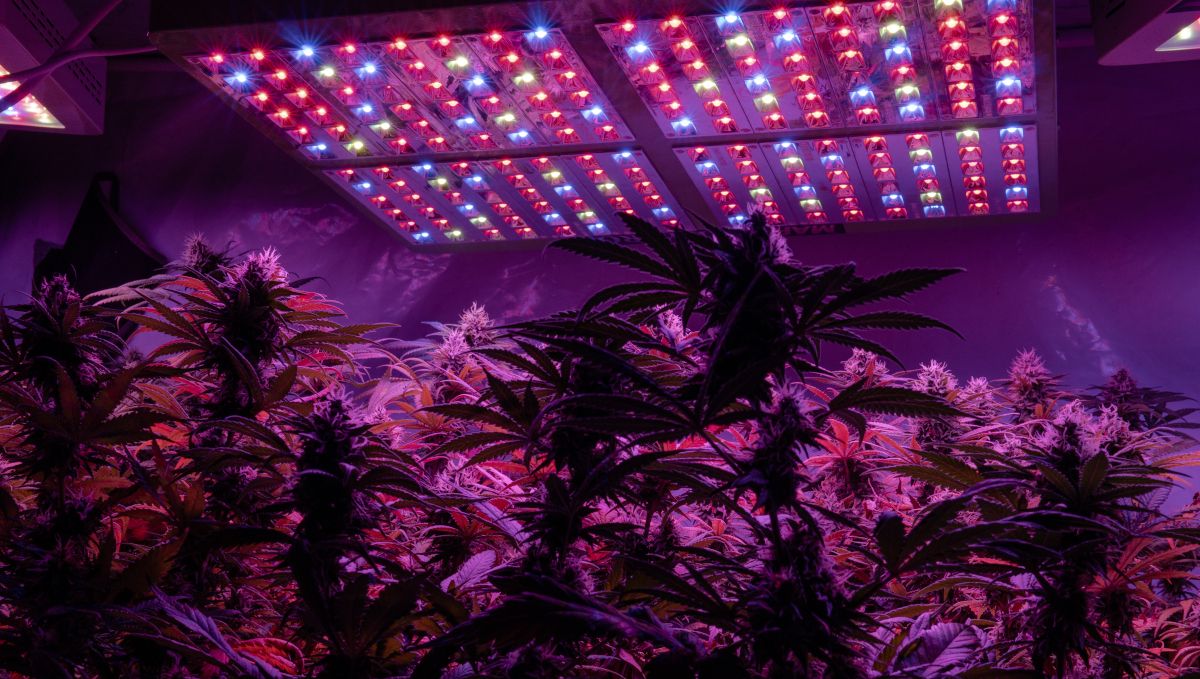
Reduced energy consumption also means LED light puts out less heat. This becomes especially useful indoors, where growers go to great lengths to balance the temperature and humidity within their cultivation space. Having a light that doesn’t churn out lots of heat means you’ll have one less variable to worry about.
Additionally, some LED lights emit ultraviolet rays in the form of UVA and UVB. This form of light partially mimics the radiation emitted by the sun that plants are exposed to when grown outdoors. Some research shows that light on this spectrum helps to drive the biosynthesis of secondary metabolites in cannabis plants, including the production of cannabinoids and terpenes. While more research is needed in this area, UV light could serve as a simple means of boosting the flavour, aroma, and potency of your cannabis buds.
You can grow your autos however you want, and as long as you do it properly, you’ll have great results, but if you’re looking for top-shelf harvests, it’s essential you grow them under the best lighting you can. Remember that the best light should not only provide the intensity needed for the grow space and number of plants but also provide a spectrum that will encourage your plants to show their maximum potential.
So, for example, if you were to compare two clones grown in the same conditions but one being grown under a full-spectrum LED and the other grown in an MH/HPS bulb mix, it’s most likely that the one under LEDs develops better due to receiving all the spectrum wavelengths that it would get in nature.
As you may know, cannabis plants in nature grow under the sun, so to get the best quality possible, your light source should emit light that resembles the sun’s light as closely as possible, and that is the case with high-quality LED fixtures.
Obviously, you will find all kinds of LEDs, and most of them won’t be better than bulbs, but if you’re really willing to invest in your grow setup, a high-quality LED light will have exceptional results, and you will surely be able to see the difference in the quality, density, and trichome production of your flowers.
Just remember that expensive LEDs don't do magic. They are just light fixtures, so you will also have to improve your grow setup because even the best LED won't have good results if the overall conditions (nutrients, temperature, humidity, etc.) are not up to par, so make sure you have the knowledge and prepare your whole grow tent or grow room before buying an LED.
2. Can you grow autoflowers with LEDs?
Yes, of course, you can! In fact, you can grow any type of plant using LEDs without any issues. They last for a long, long time, with some lights continuing for more than 50,000 to 100,000 hours! Even though LEDs are different from bulbs, both of them fit the same purpose when talking about Cannabis. Obviously, they have their differences but are used to grow autos and photos alike. Some growers even mix LEDs and light bulbs in the same tent with great results. Here’s a quick example of how your autoflowers might fare under LED lights, in this case, Lemon Cherry Cookies Auto.
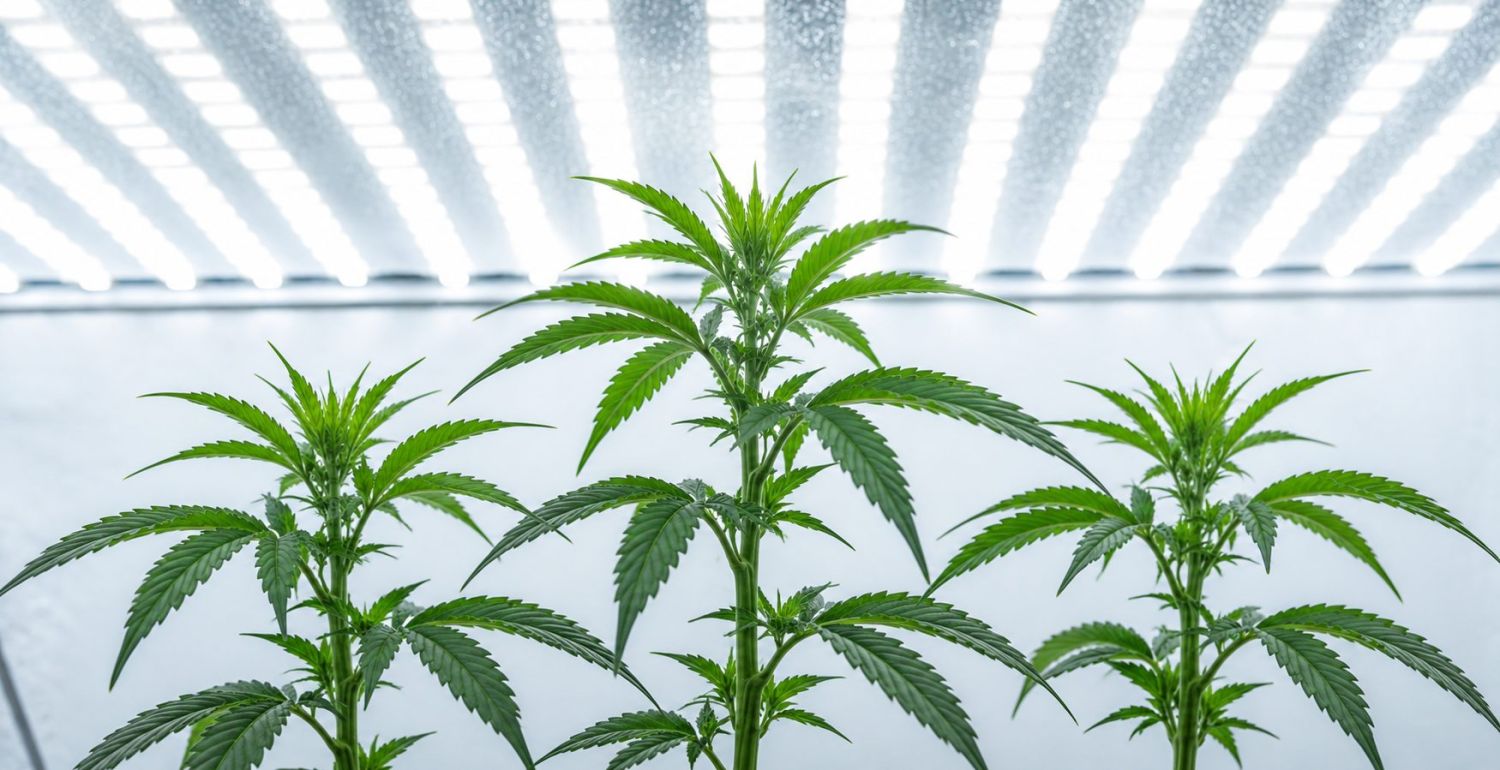
As you can see, the color combination ends up looking white. That's what you should look for when buying LEDs. The plants are super healthy, the buds are quite dense, and the plant is strong; that's what you can expect when using good-quality LED fixtures. Contrary to what some growers might think, autos really aren’t that different from other forms of cannabis. Sure, they grow quicker, flower automatically, and maintain a smaller height, but the difference pretty much stops there. These traits emerge from a small genetic difference. These aside, you can treat your autos in a similar fashion to any other weed plant. They still require high-quality lights, the same macronutrients and micronutrients, and respond well to certain forms of training. In other words, your autos will very much appreciate waves of LED light that help them to drive photosynthesis.
3. What are LED Lights?
LEDs have been around for a while, but only recently has their popularity increased. As technology advances, LEDs have been developed for other uses, and growers have benefited from that. But what exactly are LEDs? LEDs – Light Emitting Diodes – are lights that can be used to grow almost any type of plant. Technically speaking, they contain two semiconductors – electrons and holes. While electrons are negatively charged, the holes are positive. When an electric current is applied to the light, the two semiconductors collide with each other and release energy, otherwise known as photons.
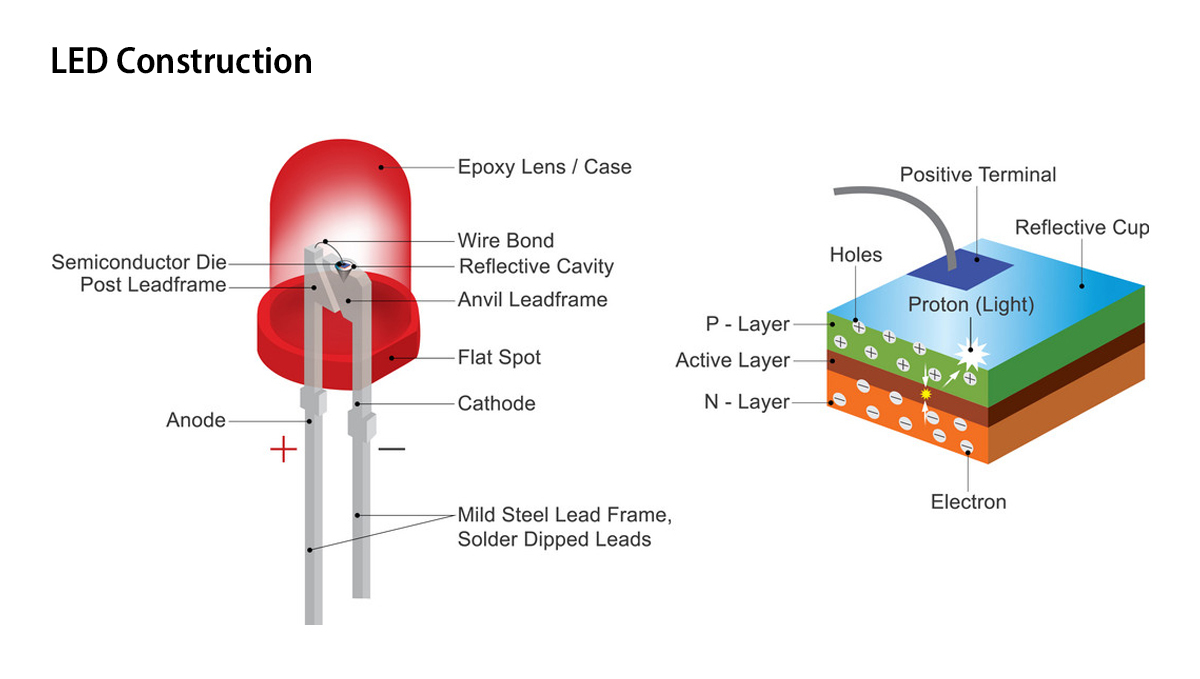
This entire process is known as recombination. The LEDs introduced at the very beginning weren’t of any advantage to a grower since the light output was meager compared to other lights; however, with technology and years of research, many manufacturers now produce outstanding LEDs that almost mimic the sun’s full spectrum.
Types of LEDs
Standard purple LEDs
These were the first LED fixtures available and are still widely available today, and although they're not the best, you can still get good results with them for cheap. This type of LED is the cheapest out there but lacks in build quality, light quality, and sometimes can result in lower yields. When growing with this type of LED, you can add complementary horizontal lighting with the proper LED strip spacing or vertical lighting with light bulbs to provide good light to the lower part of the plants.
COB LEDs
Cob LEDs (aka chip on board) are a bit more expensive than standard lights but have better penetration due to their intensity while being relatively efficient. The only drawback is that they don't have good coverage due to their format, so you'll need a bit more to properly cover your growing space.
Spread or bar-style LEDs
These types of LEDs are the latest in LED light fixtures. Due to their format, they can cover a big area and are widely used in commercial operations due to their high efficiency and wide light spectrum. With this type of LED fixture, you'll get the most grams per watt and efficiency, but they can be expensive.

4. The advantages of using LED lights
When compared to bulb fixtures, LEDs are a tad more expensive. Then why choose them? Well, LEDs may be a little more expensive than HPS or HID lights when you first purchase them, but the efficiency reduces cost in the long term, making LEDs certainly cheaper than maintaining HPS lights.
Full-spectrum
The spectrum refers to a light source that covers the wavelengths that are useful to animal and plant life, from infrared to ultraviolet. Obviously, no artificial light can mimic the sun, but when talking about a full-spectrum light, it means that it emits the entire visible spectrum and the important qualities of natural light.
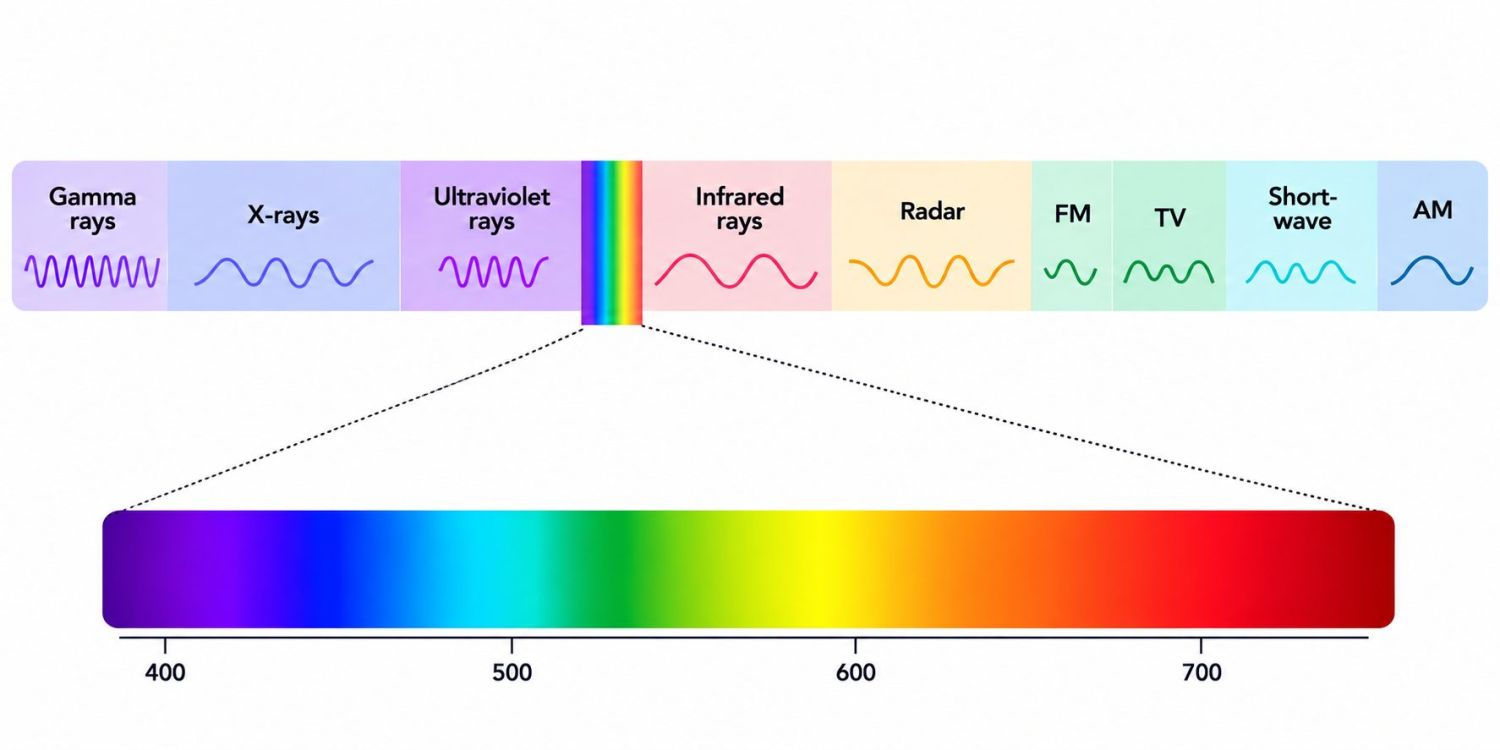
Even though not all LEDs emit all the wavelengths, you can find full-spectrum LED fixtures that will surely make a difference in the quality of your harvest. Cannabis plants produce trichomes to protect the flowers from UV rays because that’s where the seeds will develop, so if you’re growing with a good-quality LED, your plants will end up having more resinous and denser buds than with light bulbs.
Less Heat
LED fixtures will emit less heat than bulbs while emitting the same light intensity and drawing less power. You can easily find LED fixtures that come with fans, but usually, it’s not needed as long as you are dealing with good quality diodes and have oscillating fans and an extractor properly working in your growing tent. Reduced heat production comes with an array of advantages, especially if you’re trying to grow autoflowering weed indoors within a warm climate. Cannabis plants like things warm, but start to suffer when the environment gets too hot. While air conditioners and fans help to keep temps under control, having a light that doesn’t pump out too much heat makes this balancing act a whole lot easier.
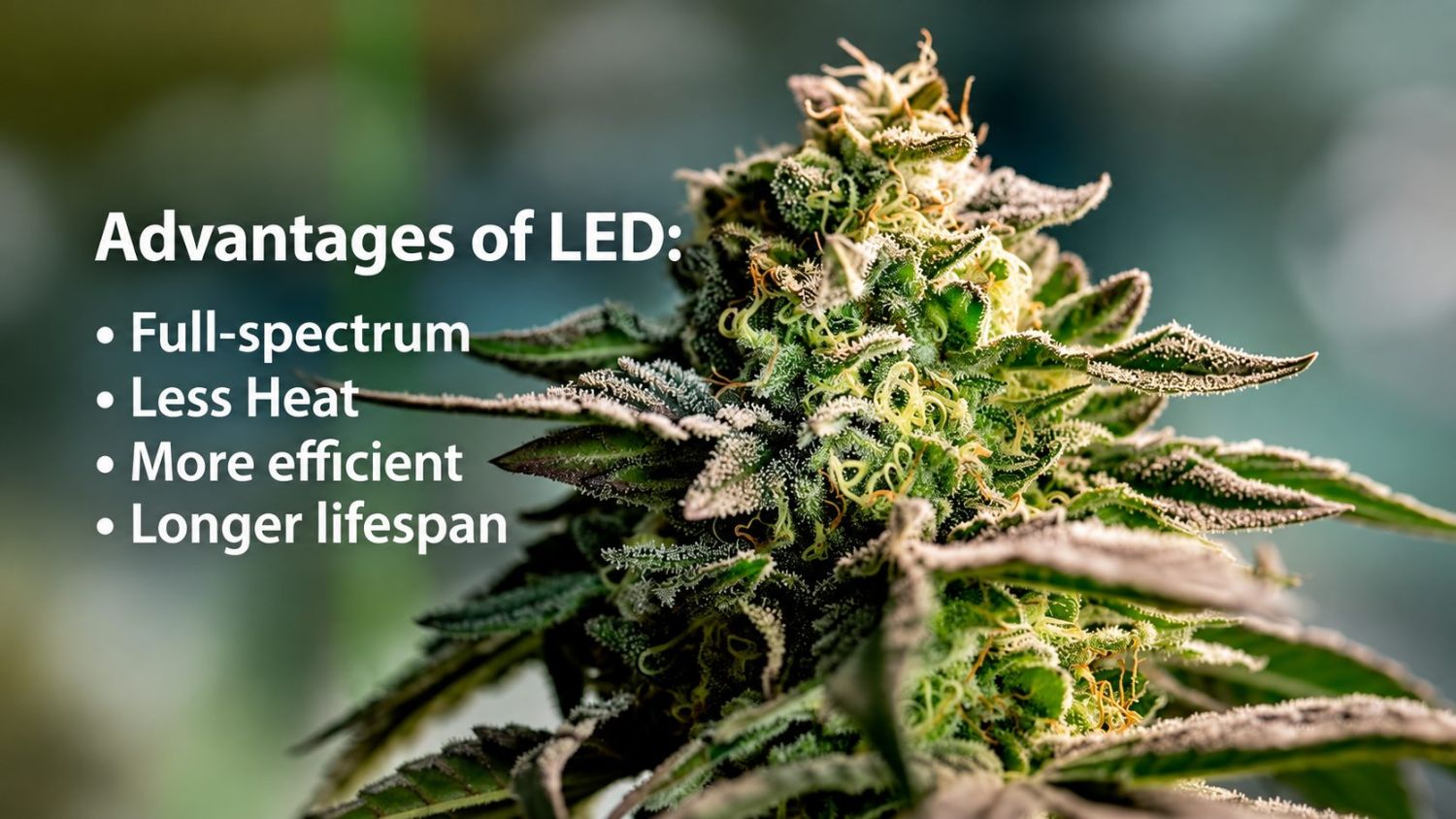
Overall, cannabis growing lights emit two kinds of energy: Light and heat. Because LED lights emit less heat, they are more efficient and will cost you less to run than those types of lamps that run extremely hot. Not only does less heat help to keep running costs cheaper, but it helps to protect your plants, especially as they get bigger and grow closer to the top of the growing space indoors. Lights that run hot increase the chances of light burn. When leaves or buds get too close to a hot light source, they become stressed and even damaged by excess heat. This results in bleaching, yellowing, and even tissue damage. Obviously, this form of abiotic (non-living) stress can take a toll on cannabis plants and set them back a bit. Plus, if heat stress affects a bud or two, it can detract from their appearance and potency.
More efficient
Due to LEDs being more efficient, they can produce an equivalent to light bulbs using less energy. LED fixtures use up to 75% less energy while producing the same or even more light intensity. As an approximate guideline, LEDs use 12w to emit an equivalent to a 50w bulb.
More lifespan
LEDs have a lifespan of more than 50,000 hours, some even reaching up to 100,000, which is way more than bulbs. This is due to the low temperature of most fixtures. Light bulbs emit a lot of heat, which reduces their lifespan. This means that although bulbs are cheaper, you will have to replace them more often, so LEDs are cheaper in the long term.
5. The disadvantages of using LEDs
Light is vital in the photosynthesis process, which is equal to food for cannabis plants, and it’s extremely important for autoflowering plants that have a short lifespan. Now that you know why LEDs are so awesome, you might be interested to know the disadvantages as well.
Expensive
As mentioned already, the cost of LEDs is a bit more than other lights such as fluorescents, HPS, and MH lights. However, the LEDs that are being introduced now are so competitive that the prices have dropped drastically.
The manufacturing market is saturated with too many LED manufacturers, and it is indeed possible to purchase cheap LED lights. But if you love big, thick buds, then you have to go for the ones manufactured by brands that are a bit expensive.
Not all companies provide a complete spectrum
Most companies provide a complete spectrum of light; however, it’s recommended that you do your research before purchasing lights because some companies aren’t very technologically advanced yet. If you do purchase an LED, make sure that it comes with all the colors required for your lovely autoflowering cannabis plants to grow.
Directional light
Even though this has been fixed in newer fixtures, the light emitted by some LEDs is directional (like a flashlight). This means the area covered is less than when using bulbs, although manufacturers describe the coverage for vegetating and blooming plants so you will know everything you need to know before buying them.
Aging diodes
As time passes, LEDs can start to change color; even though they can last more than 50,000 hours, they can fail or even burn.
If you invest a little more in a better quality, you'll avoid having to fix it for a long time. Usually, branded LEDs are made with good diodes that can last years and years without a problem.
Problems with individual diodes are more common with cheaper LEDs, but if you can invest a little more and buy a good fixture, it’s unlikely it will happen.
6. How to grow autoflowers with LEDs
A major advantage of using LEDs is that you don’t have to change the light to match the stages of the plant. For instance, the plant needs a lot of blue light in the vegetative phase and more red light in the flowering stage. In such stages, growers use MH lights and switch to HPS lights during flowering. Even if you use CFLs, “Cool Blue Daylight” lights are used specifically in the growing phase.
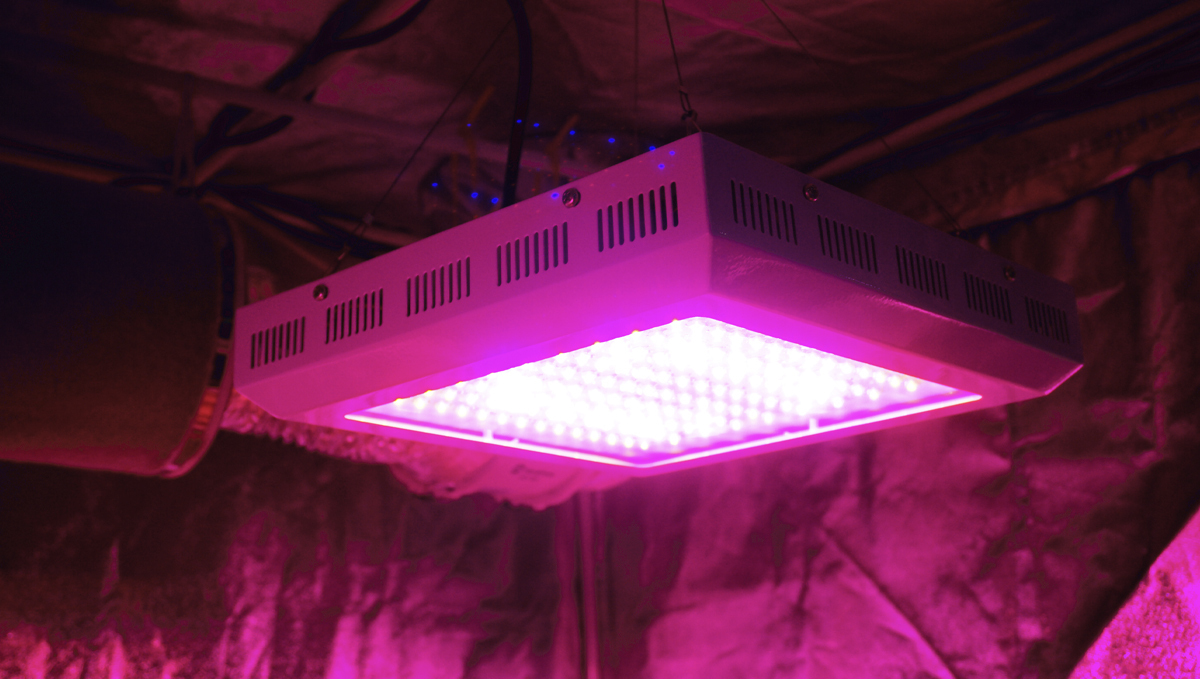
Since LEDs contain all the colors (full-spectrum), there’s no need to switch the lights between phases. But remember that this is true only with certain lights.
Best LEDs for autos
There isn’t a single best LED for autos. As long as it’s a good quality fixture, you’ll be fine. When buying an LED, remember that not all of them emit the whole spectrum, so have that in mind. We also recommend you read all the information about it, like how much space they cover in the vegetative stage and in the flowering stage. Check the listed wattage and the actual wattage (which is how much they actually draw from the wall), and read a lot of reviews about it; this will help you decide on the best one for you.
Remember that LEDs are quite intense, so when growing autos with them, you should be careful. Although autos aren't affected by light toxicity as much as photoperiodic plants, ideally, you should grow in a lightproof space.
7. Things to keep in mind when growing autoflowers with LEDs
Light Distance To Plant
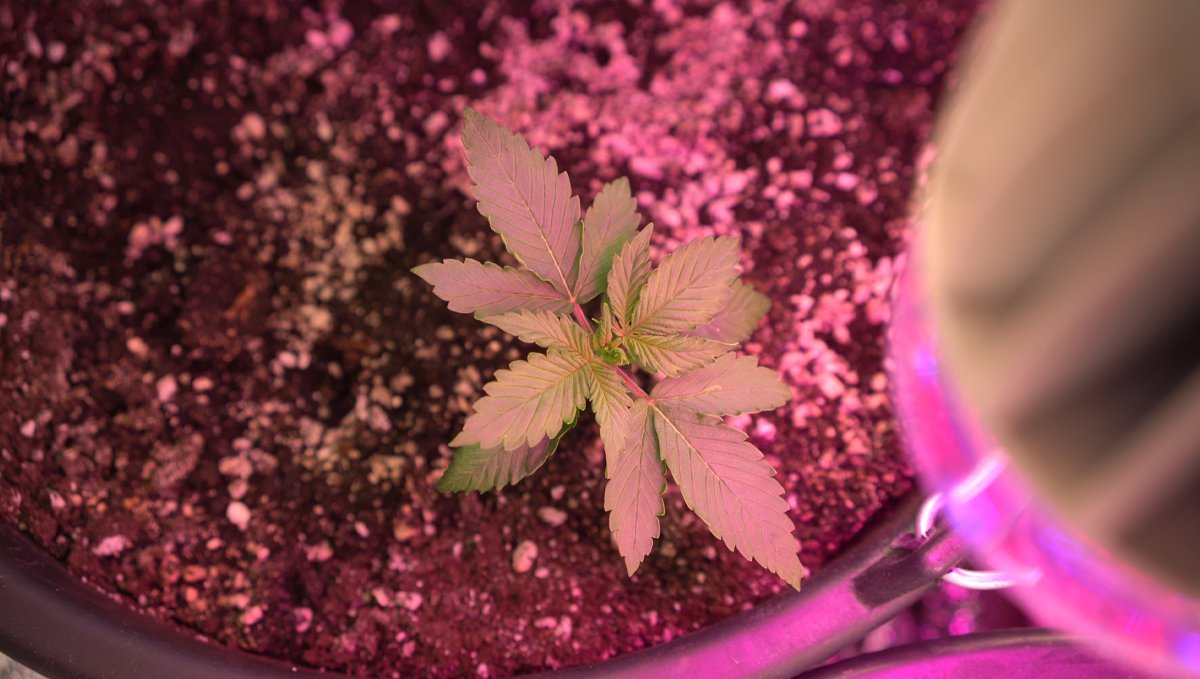
Growing seedlings with LEDs can be a little tricky. Seedlings are very fragile, and if the lights are too close, they tend to burn. Conversely, they grow tall and lanky if the lights are far away. So, the trick is to maintain the perfect distance between the plant and the light. This is why many growers use T5 fluorescent lights, CFLs, and MH lights to tend to seedlings. However, if you plan to use LEDs for the entire cycle, you need to be very careful at the beginning. For starters, read the manufacturer’s instructions carefully.
In any case, make sure to measure PPFD with a PAR meter. The recommended values range between 100-300 PPFD for seedlings.
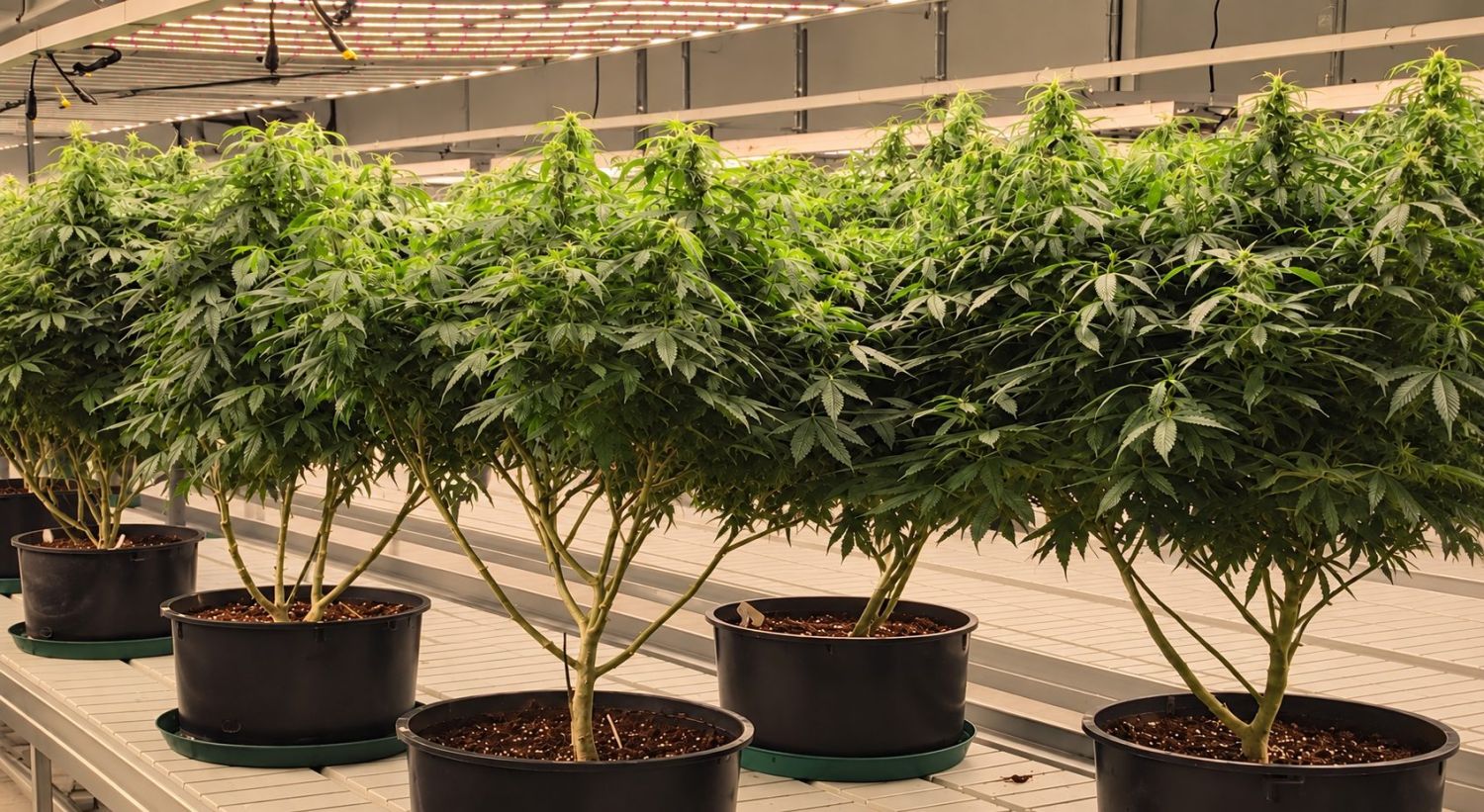
Once you observe how the plants react, you’ll be able to judge the distance and light intensity yourself.
However, you can remove any guesswork by harnessing the power of science. Instead of relying on distance as a measure of light intensity, you can directly measure light intensity using two different methods. The cheapest way to do this is by purchasing a lux meter. Lux is the unit of illuminance per unit area, meaning you can figure out the intensity of light falling across your growing space.
As mentioned, lux only measures wavelengths of light that can be seen by the human eye. Although not ideal, it’s still helpful to get a rough idea of light intensity. You should aim for a lux of 6,000 during the seedling stage, 30,000 during veg, and 50,000 during flowering. Alternatively, you can invest in a slightly more expensive PAR meter, aiming for 400 - 700 PPFD during the vegetative stage and 800 - 1000 PPFD during the flowering stage.
Listed Wattage vs Actual Wattage
Manufacturers usually claim their LEDs are 1000W or 2000W, but that’s actually the LED equivalent to bulbs. When looking to buy an LED, you should also look at the actual power that light fixture draws from the wall. This equivalent often differs depending on the quality of the diodes and efficiency of the light fixture.
For example, low-efficiency LEDs that range from $40-$50; in general, 1 LED watt is the equivalent of 1.45 HPS watts. As said above, the equivalency varies depending on the quality of the light fixture. So for example, with medium-efficiency LEDs that range from $ 70- $ 100, 1 LED watt is equivalent to 1.75 HPS watts. And with the high-efficiency LEDs that range from $100-$700 or more, 1 LED watt is (approximately) equivalent to 2.17 HPS watts.
Listed Wattage vs Actual Wattage
| Low efficiency LED | Medium efficiency LED | High efficiency LED | Light Bulb equivalent |
|---|---|---|---|
| 69w | 57w | 46w | 100w |
| 138w | 114w | 92w | 200w |
| 276w | 228w | 184w | 400w |
| 414w | 343w | 276w | 600w |
| 552w | 457w | 369w | 800w |
| 690w | 571w | 460w | 1000w |
By following this table, you can know how much you’ll really be providing to your plants. Flowering with the optimal wattage will result in healthier plants, better quality flowers, and a bigger yield. Remember that this is approximate, and the equivalent will change according to the brand and overall quality of the light fixture.
The Easiest Way To Calculate LED Efficiency
To calculate the equivalent for your specific LED fixture, you should divide the equivalent by the actual power to get the equivalent for 1 LED watt. So, for example, if your LED is listed as being the equivalent to a 600w HPS but only drawing 350w from the wall, do the following:
600 ÷ 350 ≈ 1.71 HPS
The higher the result, the higher the efficiency of the LED fixture, so it’s a good way to know the efficiency of that new LED you’re planning on buying.
How Many LED Watts Are Needed Per Plant?
Despite LEDs being more efficient, you still have to provide at least the minimum wattage needed for your plants to develop properly. If you don’t want to spend too much, you can get away with providing the minimum LED wattage (or the equivalent for bulbs) per plant as listed below, but for the best results is recommended you provide the ideal wattage.
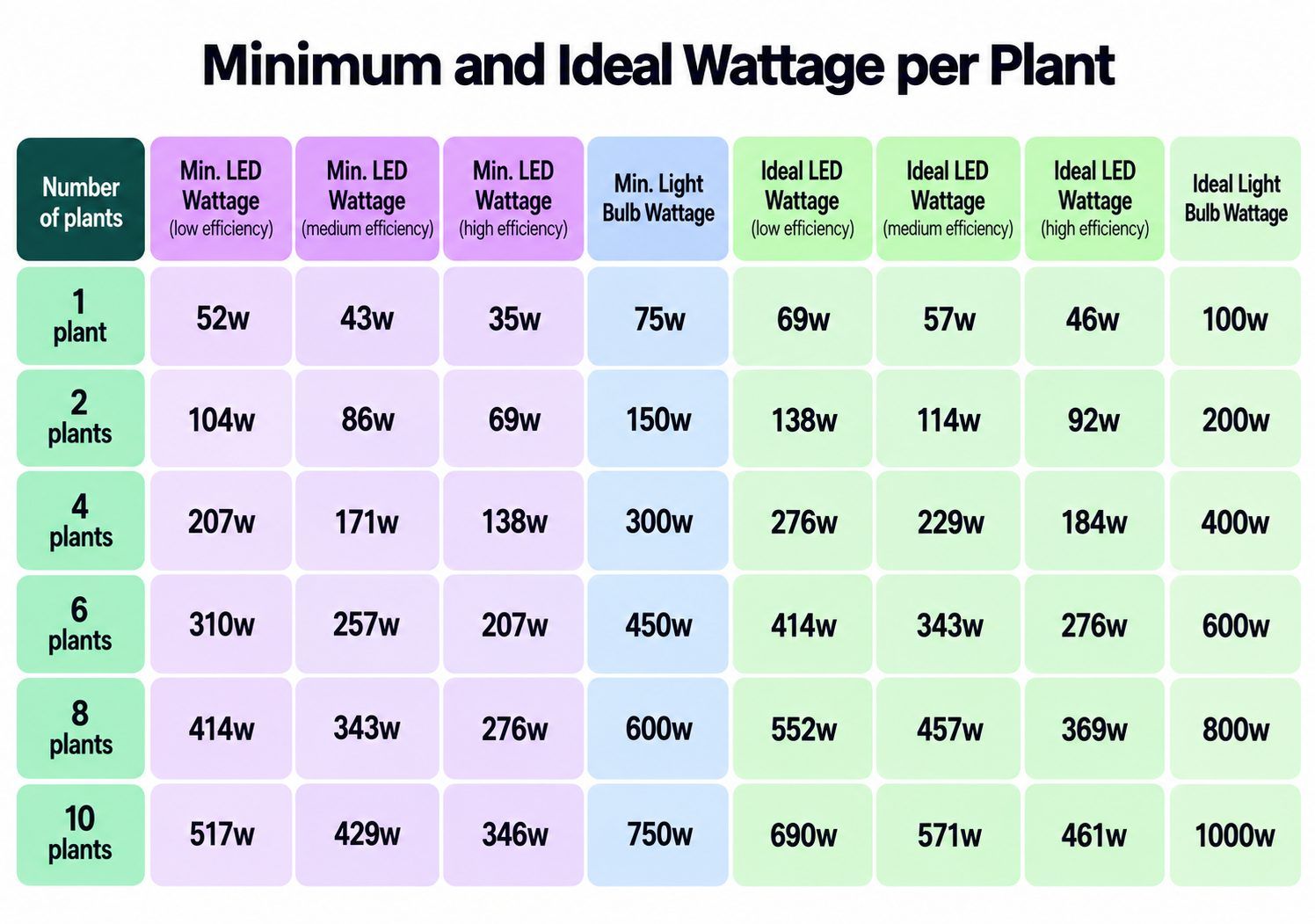
When dealing with this, you need to have in mind that the listed wattage is not actually the power LEDs draw from the wall, so we added the approximate light bulb equivalent in case the manufacturer doesn’t provide the actual wattage.
Heat
Autoflowers have a lot of growing to do, and they do it very fast. So fast that you’ll be on your toes to keep up with it. If you want the very best yields, you must be prepared to work for it. And talking about maintaining the plants, heat plays a major role. Autoflowering cannabis plants thrive in environments where the temperature is neither too cold nor too hot. If the temps exceed 27°C, the yields diminish quickly, and the buds begin to foxtail. Similarly, they cannot stand temperatures that go below 15°C.
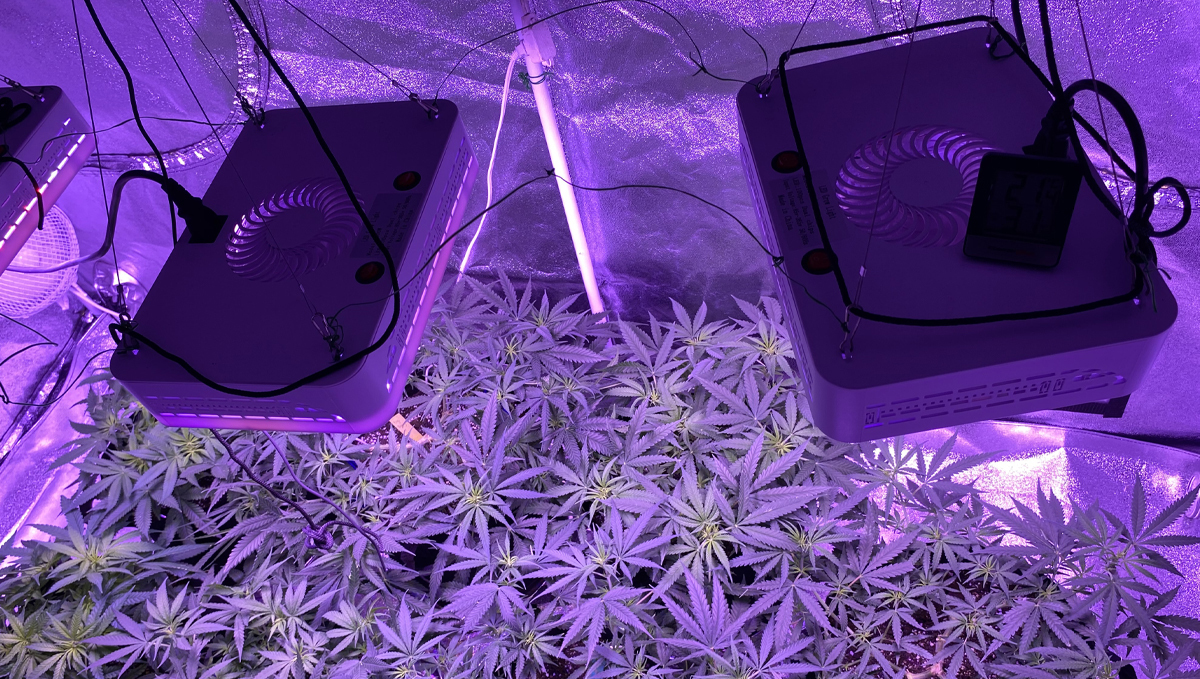
Fortunately, you can play God when growing indoors and control the temperatures. But it becomes easier if you plan it well. For instance, some lights like HIDs emit a lot of heat, and the temperatures soar pretty quickly. Even though it’s not that common, some LEDs exhibit similar tendencies and produce too much heat. Therefore, make your life easier by purchasing lights with built-in fans to reduce the heat.
Use Lights With Better Features
LEDs offer so many features that it can be mind-boggling. From dimming to power efficiency to a full spectrum, they appear to be the perfect companion to your autoflowering plants. However, while some companies offer all the features, they come with a price tag.
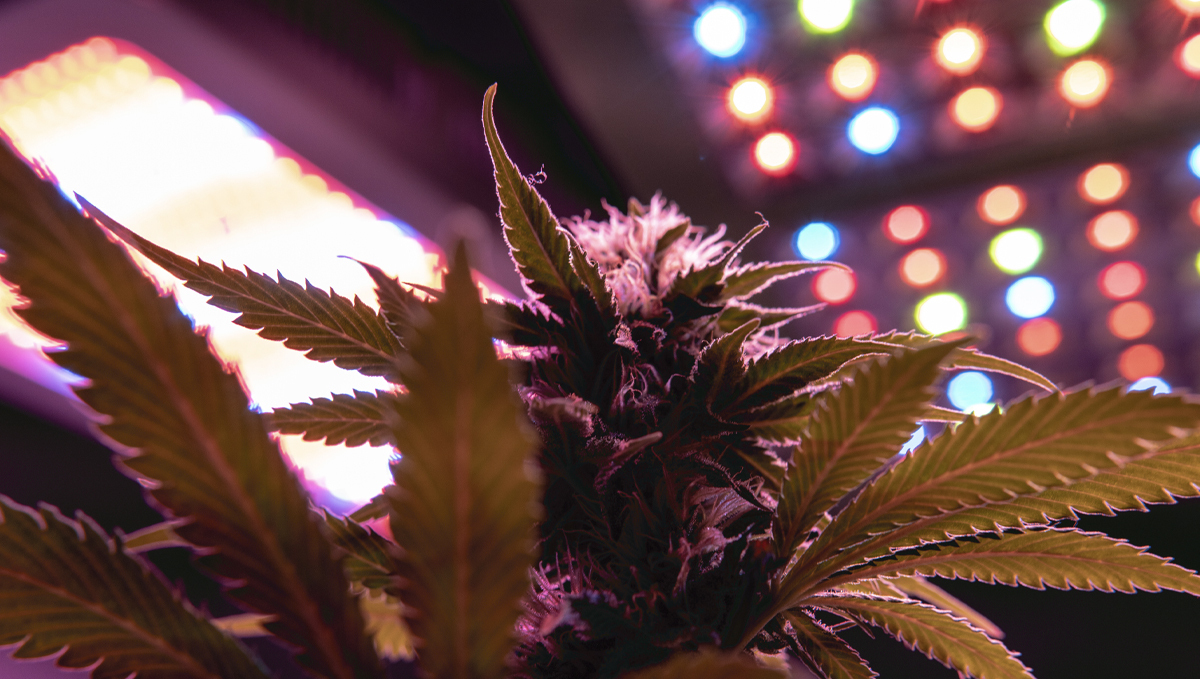
If you’re really interested in quality yields, though, look for lights that offer ‘dimming’ features. Some lights come with knobs that can be used to adjust the brightness of the light. For example, plants need less light during the vegetative phase and more light during the flowering phase, so to save energy and money, they can be dimmed. However, if you absolutely cannot afford such lights, it’s still okay because the plants will grow even if you don’t dim the lights.
Research, Research, and More Research
The only way to grow excellent plants is by choosing good lights. And you need to do a lot of research to buy lights that suit your setup. LEDs are available in various sizes and watts, and the differences in costs and features can be jaw-dropping. For instance, a branded 300W light can cost anywhere from $80 to $100. Bigger brands offer the same at $350, but even newer ones with advanced features can reach up to $1000.
Remember that not always the more expensive LEDs are better, so make sure you research a lot before buying your light fixtures.
If you dig a little further, you’ll be surprised – nay, shocked – to find out that some brands offer 1000W lights for just $70 and others sell the same wattage LED for up to $1500! Amazing, eh? Obviously, there are differences in how the lights perform, and it’s up to you to figure out what your plants truly need.
8. In conclusion
You don’t need the best lights on the market to grow good cannabis, but if you want to stay updated with the latest technology and improve your harvests, LEDs are the way to go. Not only will they improve your harvest, but they will also consume less energy, making up for the initial investment in the long term. If you have changed from bulbs to LEDs and noticed a difference, feel free to share your experience in the comment section below!
FAQ
LEDs can be a good lighting option because they are energy-efficient, produce relatively little radiant heat, and are available in full-spectrum configurations.
Autoflowers are not dependent on a change in light cycle to begin flowering. Growers commonly use schedules such as 18 hours of light and 6 hours of darkness.
The appropriate output depends on the size of the growing area, the number of plants, and the efficiency and design of the fixture rather than wattage alone.
Yes. Excessively intense or close lighting can cause light stress, bleaching, curling, or damaged foliage even when the fixture itself does not feel especially hot.
No. A quality full-spectrum LED can generally be used throughout the entire growth cycle without changing fixtures.
Yes. LEDs are commonly used in compact indoor growing spaces because efficient fixtures can provide substantial light while producing less heat than many traditional lamps.
A 100-watt LED may be adequate for a small growing area and up to 4-5 plants, depending on the fixture's efficiency, coverage, and the number and size of plants.
Light intensity is often adjusted as plants mature. Seedlings usually require 100-200 PPFD, plants in the vegetative stage 400-700 PPFD, and flowering plants 800-1000 PPFD.
Lighting quality and intensity can influence plant productivity, but genetics, nutrition, temperature, growing medium, root health, and overall plant care also affect the final result.
While both types of lighting can produce top-shelf weed. Modern LEDs generally offer higher energy efficiency, lower heat output, and easier environmental management. HPS fixtures can still provide strong light, but typically consume more electricity and generate more heat.

Comments